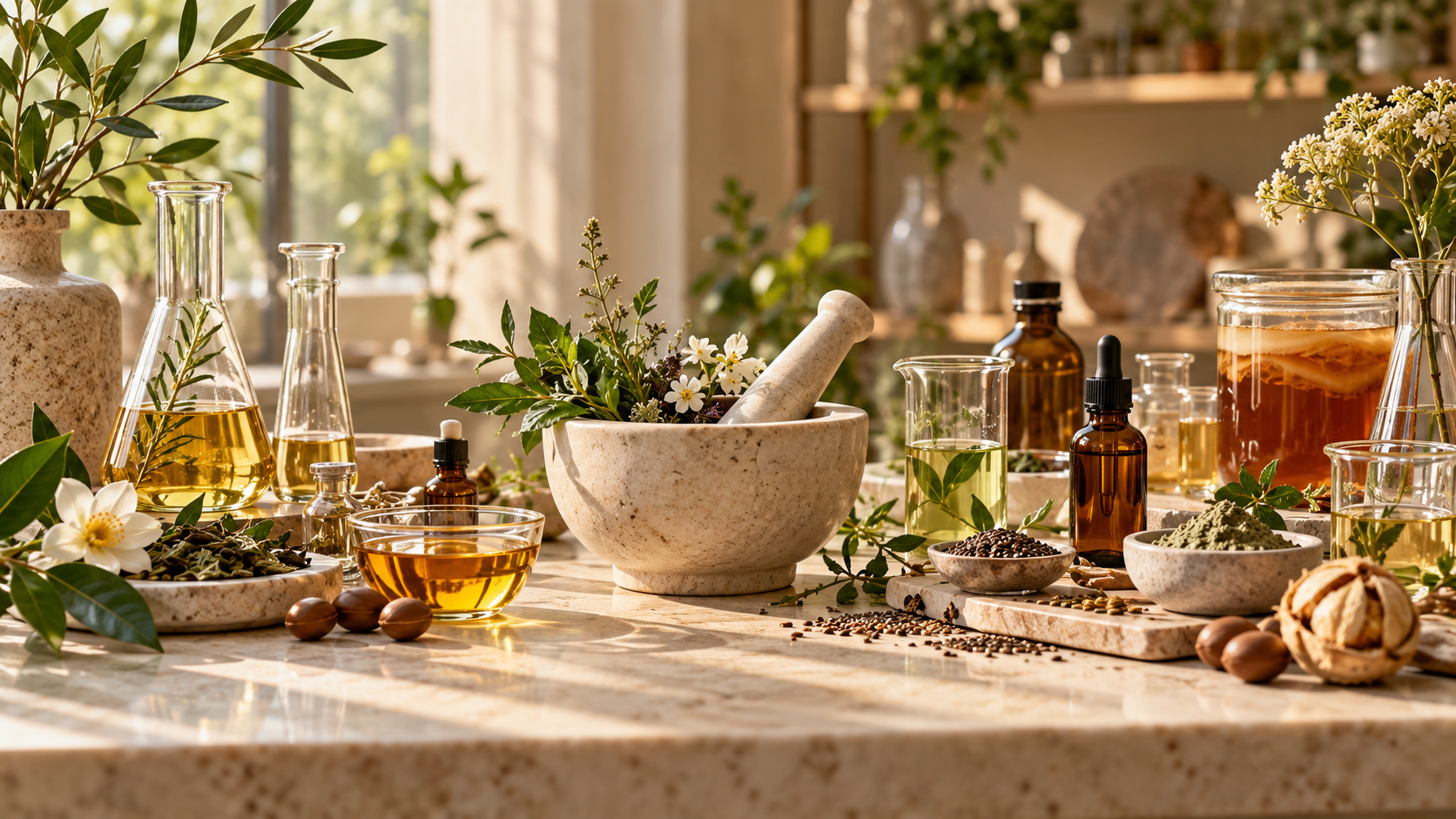
Beauty is moving beyond fast trends and toward formulas that unite botanical knowledge, modern cosmetic science, responsible sourcing, and meaningful sensory experience.
The strongest ingredient conversations of 2026 are not about one miracle botanical or a guaranteed transformation. They are about thoughtful systems: how an ingredient is sourced, processed, formulated, experienced, and supported by appropriate cosmetic evidence.
The future of ritual beauty is not nature versus science. It is nature understood more carefully through responsible innovation.
1. Fermented and Microbiome-Conscious Ingredients
Fermentation is being explored as a way to transform botanical materials and create cosmetic ingredients with different sensory or formulation characteristics. Fermented extracts may appear in scalp, skin, and hair-care products designed to support a balanced, comfortable care experience.
- Fermented rice water and grain-derived extracts
- Fermented botanical or tea extracts
- Postbiotic-inspired cosmetic ingredients
- Gentle formulas focused on scalp and skin comfort
Microbiome language should be used carefully. A cosmetic can support cleansing, conditioning, hydration, or comfort, but it should not claim to diagnose or treat a medical condition without the required evidence and regulatory pathway.
2. Retinol Alternatives and Barrier-Supportive Actives
Consumers continue to seek effective cosmetic routines that feel gentle and sustainable. This has increased interest in plant-derived or biotechnology-supported ingredients positioned as alternatives to stronger traditional actives.
- Bakuchiol and other plant-derived cosmetic actives
- Peptides and amino-acid blends
- Ceramides, squalane, and barrier-supportive lipids
- Oat, aloe, and botanical ingredients selected for a comforting feel
The new luxury is not maximum intensity. It is a formula that performs its cosmetic purpose while remaining pleasant enough to use consistently.
3. Biotech-Derived Natural Actives
Biotechnology is helping formulators reproduce or refine nature-identical and bio-based cosmetic ingredients with greater consistency. Depending on the ingredient and process, this approach may support purity, reliable supply, traceability, or reduced pressure on limited natural resources.
- Fermentation-derived cosmetic compounds
- Bio-based peptides and humectants
- Lab-cultivated botanical components
- Standardized extracts with consistent formulation performance
“Natural,” “biotech,” and “clean” are not automatic measures of safety or effectiveness. Finished formulas still require appropriate testing, preservation, stability, and responsible claims.
4. Upcycled and Regenerative Ingredients
Ingredient innovation is increasingly considering what happens before a formula reaches the customer. Upcycled materials can give useful cosmetic value to plant matter that might otherwise be discarded, while regenerative sourcing looks more closely at soil, biodiversity, farming relationships, and long-term impact.
- Fruit seeds, peels, and botanical by-products
- Oils recovered from food or agricultural processing
- Traceable botanical supply chains
- Packaging and production decisions designed to reduce waste
Responsible beauty considers not only what an ingredient does, but where it came from and what its journey required.
5. Ancestral and Sensory Ingredients
Beauty rituals are also becoming more sensory and emotionally meaningful. Oils, butters, herbs, resins, floral waters, clays, and aromatic botanicals can connect modern routines to family knowledge, cultural memory, and the pleasure of slowing down.
- Honey, propolis, and beeswax-inspired textures
- Herbal infusions and botanical waters
- Rich plant butters and seed oils
- Warm, grounded sensory profiles
Specific traditions should be named and discussed with cultural context. Ancestral knowledge should not be flattened into a trend or used to imply universal practices across entire regions.
What Thoughtful Formulation Looks Like
A compelling ingredient list is only one part of a good cosmetic product. Concentration, compatibility, preservation, packaging, stability, intended use, and consumer experience all influence the quality of the final formula.
For shoppers, the most useful questions are often simple: What is this product designed to do cosmetically? How should it be used? Is the claim specific and realistic? Does the formula suit my preferences and sensitivities?
Closing Reflection
The 2026 ingredient forecast points toward beauty that is more thoughtful, transparent, sensory, and intentional. Botanical wisdom and cosmetic innovation can coexist when both are approached with respect, testing, and honest communication.
Educational note: This article provides general cosmetic ingredient education. It does not offer medical advice or guarantee that any ingredient will treat a health, scalp, skin, or hair condition.



