
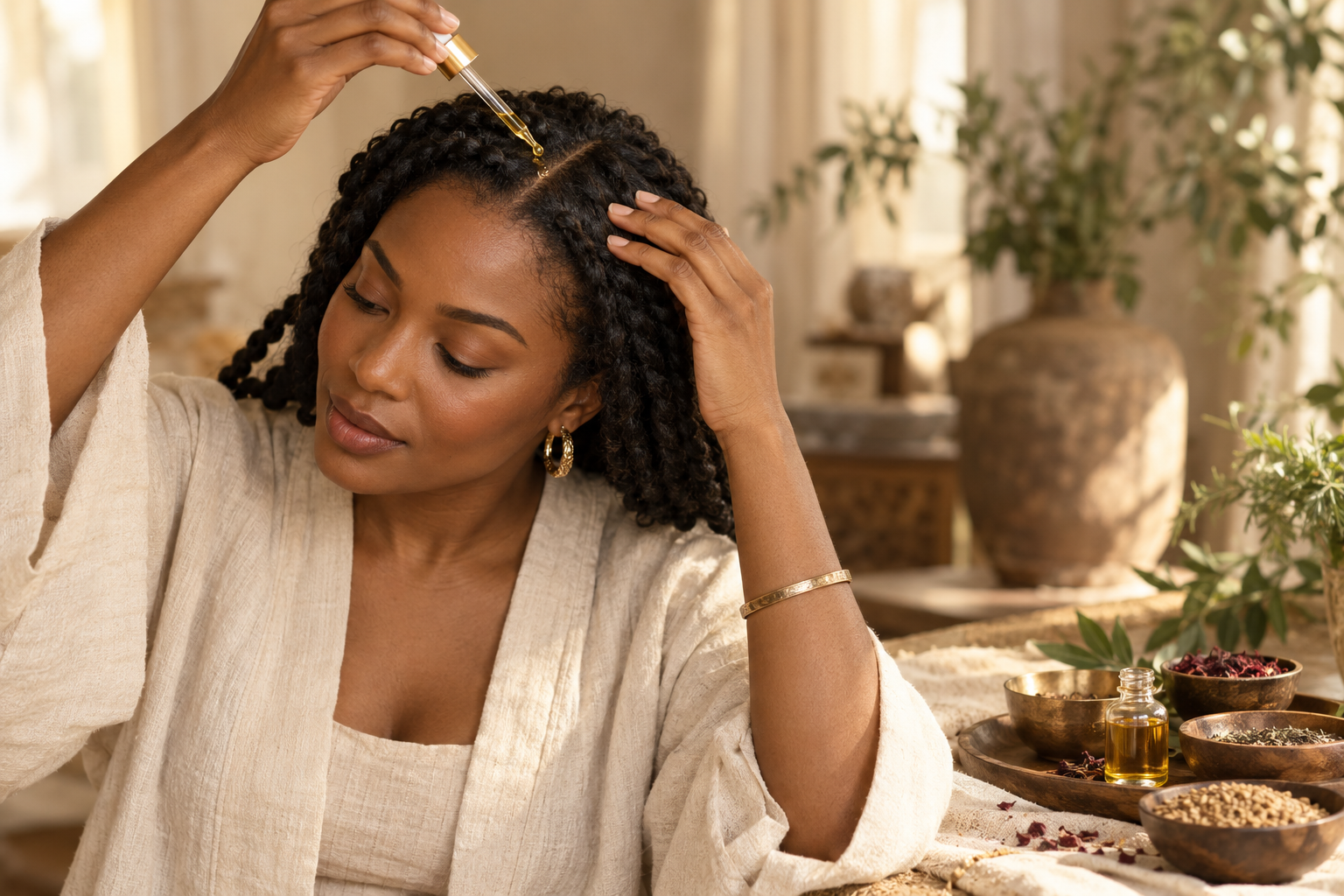
Hair rituals across African and Indian traditions are diverse, regional, and deeply connected to community, environment, and everyday beauty practices.
There is no single “African” or “Indian” hair tradition. Practices vary across countries, regions, ethnic groups, families, climates, and generations. This article offers an educational introduction to several time-honored approaches without presenting them as universal.
Across many traditions, crown care has been practiced through patience, botanical preparation, protective styling, gentle touch, and shared knowledge.
West African Shea and Protective-Care Traditions
In parts of West Africa, including communities in Ghana, Burkina Faso, Mali, and Nigeria, shea butter and locally available plant oils have long been used in personal-care practices. Braiding, threading, wrapping, and other protective styles may help reduce daily manipulation while expressing identity, artistry, age, status, or community connection.
Specific methods and meanings differ widely. They should be understood within their own cultural and regional contexts rather than treated as one shared practice.
North and East African Botanical Practices
Across parts of North and East Africa, families have used regionally available oils, herbs, clays, and aromatic botanicals in grooming rituals. Examples may include olive oil in Mediterranean North African communities, plant butters and seed oils in Sahel regions, and herbal preparations shaped by local climate and family tradition.
These preparations are best described as cosmetic and cultural practices—not guaranteed treatments for hair loss or medical scalp conditions.
Ayurvedic-Inspired Hair Rituals in India
In Indian traditions influenced by Ayurveda, scalp and hair oiling is often practiced as part of regular grooming and self-care. Ingredients such as coconut oil, sesame oil, amla, hibiscus, fenugreek, and bhringraj appear in different household and regional preparations.
Southern coastal regions, including Kerala and Tamil Nadu, commonly use coconut-based preparations because coconut is locally abundant. In other regions and family traditions, sesame, mustard, or blended botanical oils may be preferred. Formulas and techniques vary rather than following one universal ritual.
Gentle Scalp Oiling
A modern, cosmetic interpretation of these traditions may include applying a small amount of suitable oil to the scalp and hair, followed by gentle fingertip massage. The goal is to support a conditioned scalp-care experience and help reduce the dry feel of the hair—not to promise hair regrowth.
- Choose an oil or formulated product appropriate for your scalp and hair
- Use a small amount and apply gently
- Avoid aggressive rubbing or excessive tension
- Discontinue use if irritation occurs
- Patch test unfamiliar botanical products before wider use
Botanical Cleansing and Conditioning
Shikakai, hibiscus, aloe, clays, and other botanicals appear in various cleansing or conditioning traditions. Their use depends on preparation method, hair texture, scalp sensitivity, and local knowledge. Botanical does not automatically mean irritation-free, so thoughtful formulation and patch testing remain important.
Protective Styling and Intentional Handling
Braids, twists, wraps, buns, and other low-manipulation styles can be part of an intentional hair-care routine. Styles should remain comfortable and should not place excessive tension on the scalp or hairline.
What These Traditions Can Teach Us
Although the ingredients and methods differ, many rituals emphasize consistency, gentleness, shared knowledge, and respect for the crown. Their value is cultural and experiential as well as cosmetic.
The lesson is not to copy every tradition as though it were universal, but to learn with respect, name practices specifically, and bring greater intention to personal care.
Closing Reflection
Ancestral beauty knowledge is most meaningful when it is approached with context and care. By recognizing regional differences and avoiding exaggerated promises, we can appreciate these traditions while creating modern scalp- and hair-care rituals that feel thoughtful, gentle, and informed.
Educational note: This article discusses cultural and cosmetic practices. It does not provide medical advice or claim to treat hair loss or scalp conditions.



